Defoamer for Paint & Coating: Testing Methods, Common Defects & Solutions
Antifoam for paint plays a crucial role in ensuring the quality and smoothness of paint films. Engineers and manufacturers often evaluate the defoaming efficiency and compatibility of antifoams to select the most suitable product for their applications. This guide will discuss effective methods, including the Foam Height Method, spray coating, roll coating, and system compatibility tests, for evaluating antifoams for paint.
This guide covers several effective methods… for evaluating antifoams for paint. Once you understand how to test performance, explore INVINO’s range of high-performance waterborne defoamers designed to excel in these tests.
Defoaming Efficiency Test of Antifoam for Paint
—Foam Height Method for Antifoam for Paint
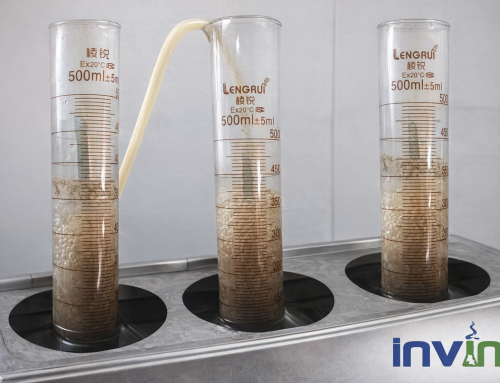
The Foam Height Method is a reliable way to measure the defoaming efficiency of antifoam for paint. It involves observing the foam reduction capabilities of the defoamer in a controlled test.
Procedure:
- Add a specific amount of paint containing the antifoam into a marked measuring cup.
- Use a micro air compressor to introduce air into the paint system.
- Observe the foam height:
- Higher liquid levels indicate poor defoaming efficiency.
- Lower foam levels suggest better defoaming performance.
This straightforward method helps engineers identify the optimal antifoam for paint based on defoaming efficiency.
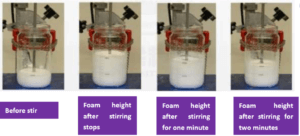
It can be used for rapid screening of initial defoamers, and needs to be combined with other test methods such as specific gravity method and roll coating method.
Specific gravity method
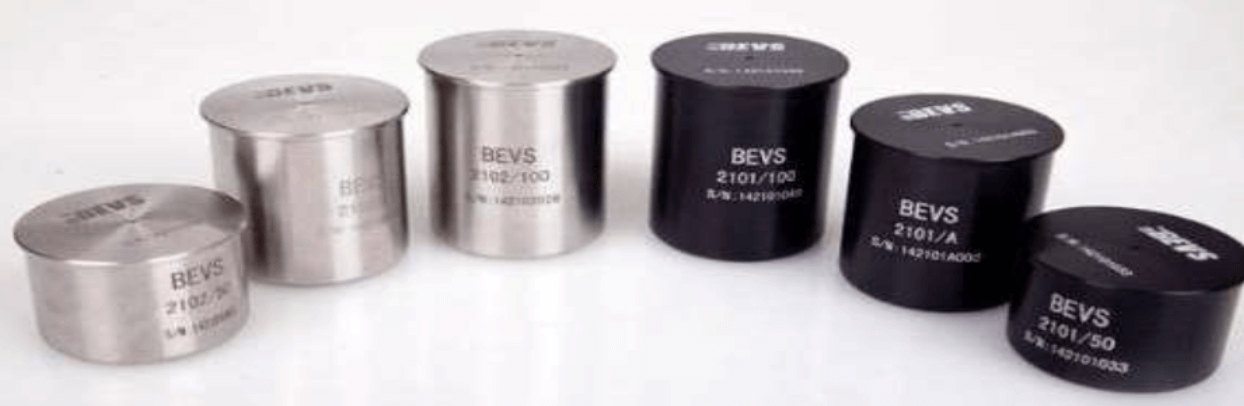
The high-speed agitated paint is poured into a density cup, the density of the paint is measured, and then the paint is sealed and stored, and the density is measured after a certain period of time to check whether the density changes.
Spray Coating Experiment for Antifoam for Paint
In this test, a coating agent containing the antifoam for paint is subjected to high-speed stirring and poured onto a polyester film placed at a 25° angle. The surface condition of the dried film is then observed to assess the defoamer’s performance.
Roll Coating Experiment for Antifoam for Paint
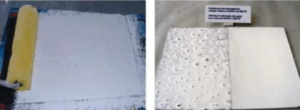
This method involves applying a coating film of paint containing antifoam onto a non-porous substrate using a sponge roller. Observing the dried coating film’s surface condition provides insight into the defoamer’s effectiveness in minimizing surface defects.
Evaluation grade of antifoam for paint
5-No bubbles, 4- very small bubbles, 3 – a small amount of bubbles, 2 – more bubbles, 1 – no bubbles
- Compatibility Test of Antifoam for Paint
- Scrape Film Test for Antifoam for Paint
This test evaluates the compatibility of antifoam for paint with the coating system.
Procedure:
- Equilibrate the paint preparation for 24 hours.
- Apply a 75 µm wet film thickness paint layer onto a glass plate.
- Observe both the wet and dried film surface conditions for defects.
Common Paint Film Defects:
- Shrinkage: Circular pits of varying sizes on the dried film.
- Fisheye: Small particles within circular pits resembling fish eyes.
- Pinhole: Small holes caused by trapped air bubbles.
- Orange Peel: Uneven surface resembling orange skin.
Rating Scale (0-5):
- 0: No film defects.
- 5: Severe defects, including shrinkage, fisheyes, pinholes, and orange peel.
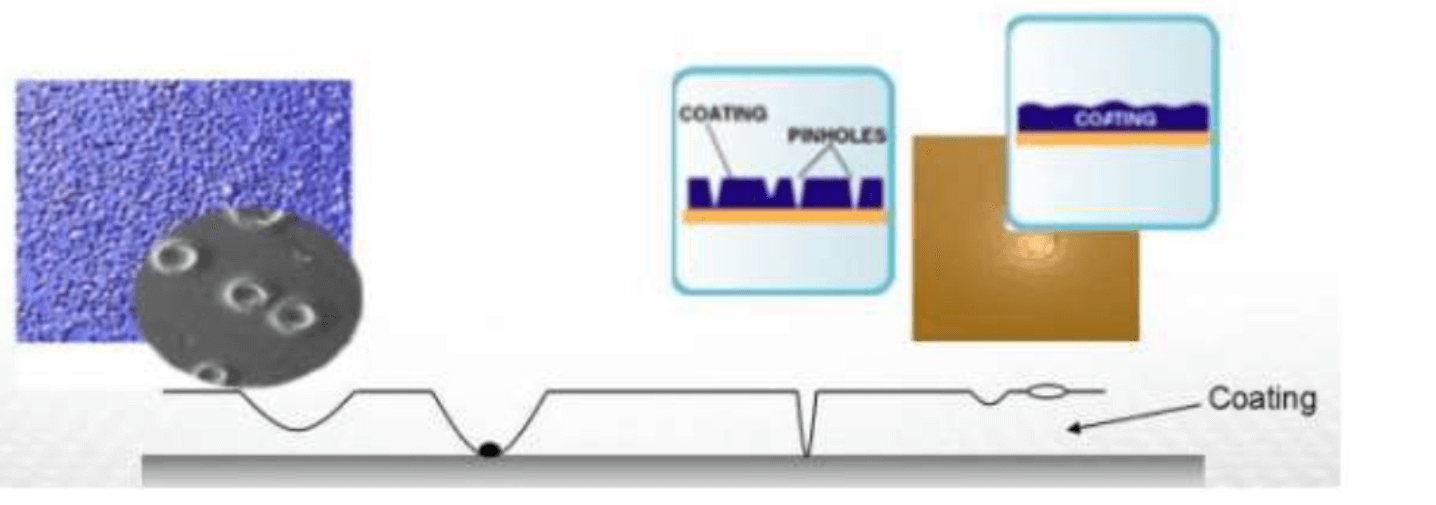
Paint film defects:
Shrinkage: the phenomenon of a number of circular pits with different sizes and different distributions after the paint film is dried.
Fisheye: There are particles in the circular pits on the surface of the paint film, which is like a “fisheye”.
Pinhole: A morbidity in the paint film that resembles a pinhole. It is caused by the air bubbles mixed in the wet paint film and other air bubbles generated, which cannot be leveled before the paint film dries.
Orange peel: The paint film has a surface-like appearance of orange peel.
Rating / 0 ~ 5 :
0 = no film defect
5 = serious paint film defects, such as local shrinkage of the paint film, pits, shrinkage holes,orange peel and other defects.
💡 Troubleshooting: INVINO Solutions for Common Paint Defects
Don’t just test for defects—solve them. As a dedicated paint defoamer manufacturer, Nanjing Invelychem offers specific grades tailored to eliminate these issues:
| Paint Defect | Likely Cause | Recommended INVINO® Solution |
|---|---|---|
| Micro-foam / Pinhole | Trapped air during high-speed dispersion |
Mineral Oil Defoamer ( INVINO-3100 Series) Excellent compatibility, cost-effective. |
| Fisheye / Cratering | Silicone incompatibility or overdose |
Mineral Oil Defoamer(INVINO-3000 Series ) Zero silicone spots, safe for topcoats. |
| Fisheye / Cratering | Poor flow and leveling |
Mineral Oil Defoamer (INVINO-3200 Series) Balances leveling and defoaming. |
Need a specific recommendation? [Contact our lab engineers for a free formulation match ]
Finding the Right Defoamer Starts with the Right Test
Evaluating defoamer efficiency and compatibility is crucial for selecting the optimal product. By using systematic testing methods like those described above, formulators can confidently choose a defoamer that ensures a high-quality, defect-free coating. Ready to find a product that passes your tests? View our featured waterborne defoamers for paints and coatings or contact our technical team for assistance.
Q&A: Solutions for Defects & Testing Standards
Q: What is the difference between Macro-foam and Micro-foam?
1. **Macro-foam:** Large surface bubbles generated during pouring or mixing. Treated with standard "Defoamers" that burst the bubble wall.
2. **Micro-foam:** Tiny entrained air bubbles trapped inside the wet film, causing pinholes or haze. Treated with "Deaerators" that help bubbles rise to the surface.
Q: How do I solve "Fisheyes" (Craters) caused by defoamers?
1. Reduce the dosage.
2. Switch to a more compatible grade (e.g., Polyether-modified Silicone).
3. Pre-dilute the defoamer or increase the high-speed dispersing time.
Q: What is the most accurate method to test defoaming efficiency?
1. Stir the paint at high speed to entrap air.
2. Measure the density immediately.
3. The sample with the **higher density** contains less air and indicates better defoamer performance.
Q: Why do you recommend adding defoamer in two stages?
1. **Grind Stage:** Add a strong, shear-stable defoamer to suppress foam during high-speed dispersion of pigments.
2. **Let-down Stage:** Add a highly compatible defoamer to control surface foam during tinting and packaging without causing defects.